
Fire Safety And Solutions
Fire safety is the systematic approach to preventing fires, protecting people and assets, controlling fire spread and ensuring safe evacuation and business continuity. While the priority is to save assets, fire safety is not just about equipment “It is a combination of engineering, technology, processes and regulatory compliance.”
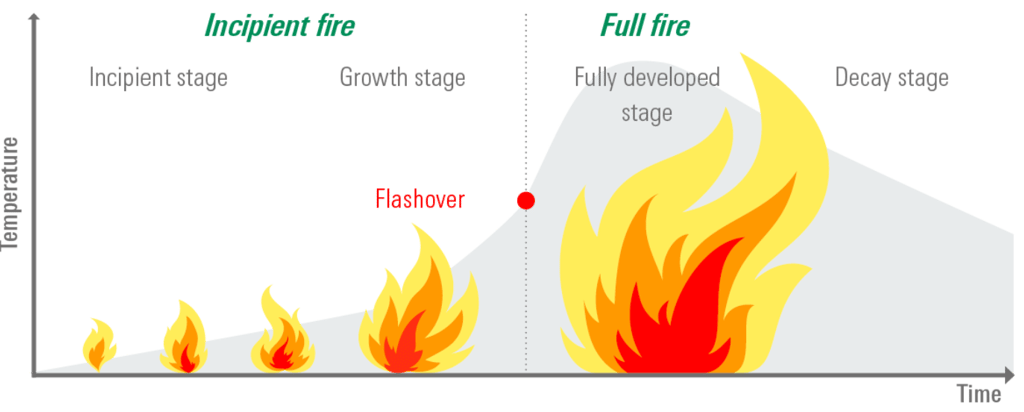
Fire safety requirements vary significantly across environments, but the core objective remains the same: Protecting Life, Assets and Continuity of operations. At PROTEXA, we design fire safety solutions that are context-driven, compliant and engineered to address the specific risks associated with each type of facility.
In commercial, residential and public infrastructure, fire safety primarily focuses on life safety, property protection and regulatory compliance. These environments include IT offices, commercial towers, malls, hospitals, hotels, educational institutions, airports and metro stations, where large occupant density demands early detection, clear evacuation pathways, and reliable alarm and notification systems. With key objectives to protect occupants and visitors, enable safe and rapid evacuation and detect fire at the earliest stage. Systems are designed to control and suppress fire before escalation, while minimizing damage and operational downtime through coordinated alarms, suppression, emergency lighting and public address integration.
In manufacturing, industrial plants and warehouses, fire safety shifts toward risk mitigation, process safety, asset protection and business continuity. Facilities such as manufacturing plants, refineries, power plants, warehouses, ports, logistics hubs and chemical or pharmaceutical units involve higher fire loads, hazardous materials and complex processes that demand advanced detection and suppression strategies.
Here, the primary objectives are to prevent catastrophic fires and explosions, protect critical machinery and infrastructure, ensure uninterrupted production and reduce financial and environmental impact. Fire safety systems are tightly integrated with process controls and emergency shutdown mechanisms, while ensuring full compliance with statutory regulations, insurance requirements and risk engineering standards.
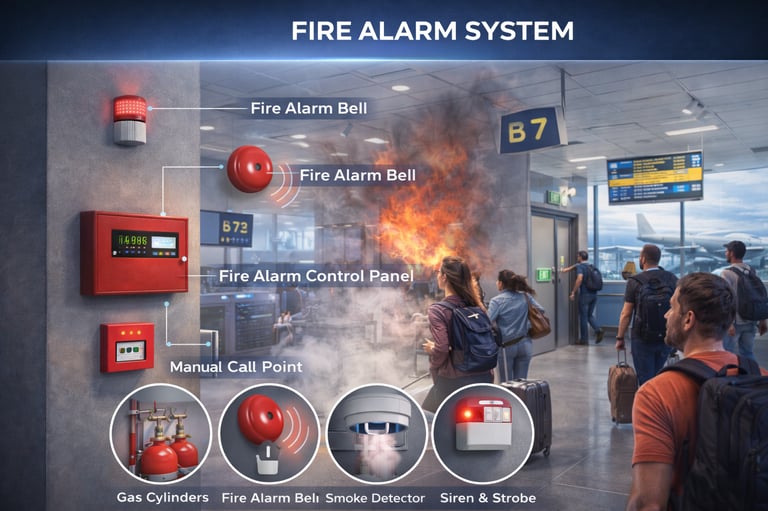
Fire alarm systems are the first line of defense against fire, designed to detect smoke, heat, and flames and alert occupants and emergency responders through audible and visual alarms. They consist of detectors, manual call points, control panels, and notification devices, operating through conventional or addressable systems with centralized monitoring.
By providing early detection and immediate alerts, fire alarm systems enable safe evacuation, faster emergency response, and effective protection of life and assets.
These systems are implemented in compliance with NBC, NFPA, IS, and FM standards, ensuring regulatory acceptance and operational reliability.
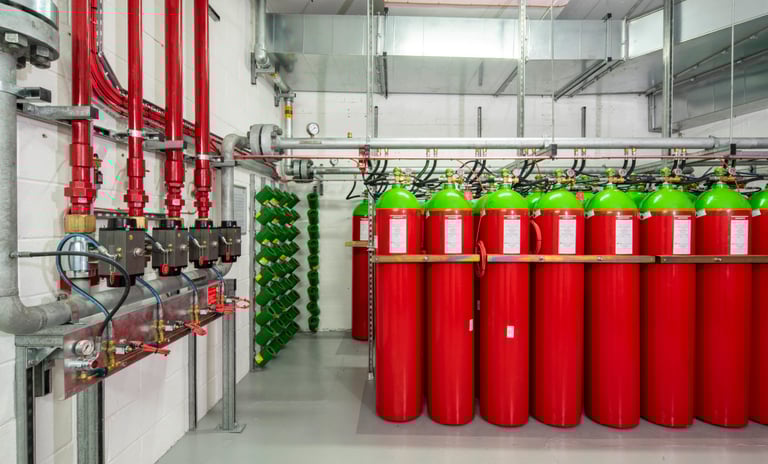
Fire suppression systems (FSS) are engineered safety solutions designed to detect, control and extinguish fires automatically without human intervention. FSS uses water, gas, foam or dry chemicals as suppression agents to rapidly contain fires, minimize damage and protect life, assets, and critical infrastructure. FSS provides fast and reliable fire control, especially in high-risk and mission-critical environments.
Immediate fire containment, reducing spread and escalation
Enhanced life safety for occupants and first responders
Asset and equipment protection, especially for sensitive electronics
Business continuity, minimizing downtime and losses
Reduced dependency on manual fire fighting, enabling safer evacuation
Fire Suppression Systems
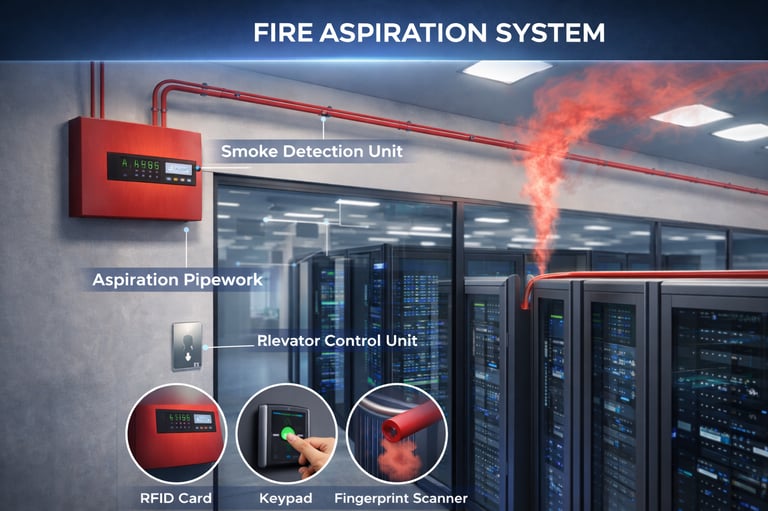
Fire Aspiration Systems, also known as Aspirating Smoke Detection (ASD) systems, are high-sensitivity fire detection solutions that continuously sample air through a network of pipes to detect incipient-stage smoke long before visible fire or conventional detectors activate. ASD’s provide very early warning, enabling proactive fire prevention and rapid response.
Ultra-early smoke detection, even at the invisible combustion stage
Reduced false alarms through intelligent filtering and analysis
Ideal protection for critical and high-value assets
Improved life safety by enabling early intervention
Continuous monitoring in challenging environments
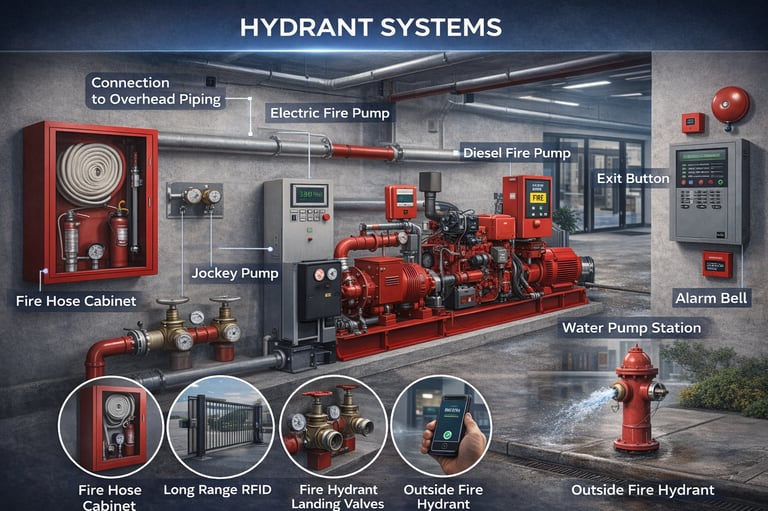
Fire Hydrant Systems form a critical component of a facility’s active fire protection strategy, providing a reliable and high-capacity water supply for firefighting operations. Designed to support both internal and external fire response, these systems enable rapid intervention to control and suppress fires before escalation.
A typical hydrant system comprises fire pumps (electric, diesel and jockey pumps), hydrant networks, landing valves, hose cabinets and external yard hydrants, all engineered to deliver adequate pressure and flow across the premises. Integrated monitoring, alarms and fail-safe controls ensure continuous system readiness, even during power failures. By ensuring dependable water availability and seamless coordination with fire services, PROTEXA’s hydrant systems enhance life safety, asset protection and operational resilience.
Contact Us
Reach us anytime for support / Queries / Clarifications
Protexa support
info@protexa.in
+91 9743 913 433
© 2026. PROTEXA, all rights reserved.
Have a question
+91 7411 265 539
support@protexa.in
No 99/2, Sudersan Layout, Garvepalya, Bangalore South, Bangalore, Karnataka, 560068
www.protexa.in