
Survillance and CCTV Solutions
CCTV and Intelligent Surveillance Systems are advanced security solutions designed to monitor, record and analyze activities across facilities, providing real-time visibility, deterrence and actionable intelligence. These systems combine high-resolution cameras with intelligent analytics to enhance situational awareness, incident prevention and post-event investigation.


Modern CCTV systems support a wide range of camera technologies, including fixed, dome, bullet, PTZ, thermal and panoramic cameras, enabling coverage of indoor, outdoor, low-light and high-risk environments. Intelligent video analytics such as motion detection, intrusion detection, facial recognition, object tracking, crowd analysis, loitering detection and behavior analytics transform surveillance from passive monitoring to proactive security.
The primary objectives are to deter security threats, detect incidents early, support rapid response and ensure operational continuity. Intelligent surveillance systems provide real-time alerts, event-based recording and automated workflows, allowing security teams to respond effectively to suspicious activities or emergencies.
CCTV systems are implemented using network video recorders (NVRs), video management software (VMS) and centralized command-and-control platforms, enabling scalable storage, remote monitoring and seamless system management. Integration with access control, intrusion detection, fire alarm systems, public address systems and building management systems ensures coordinated response during both routine operations and critical incidents.
Beyond security, intelligent surveillance supports compliance, investigations and operational optimization through detailed video logs, analytics-driven insights and audit trails. CCTV and intelligent surveillance systems are widely deployed across offices, campuses, airports, metro stations, data centers, industrial facilities, retail environments and critical infrastructure, delivering enhanced safety, accountability and resilience.
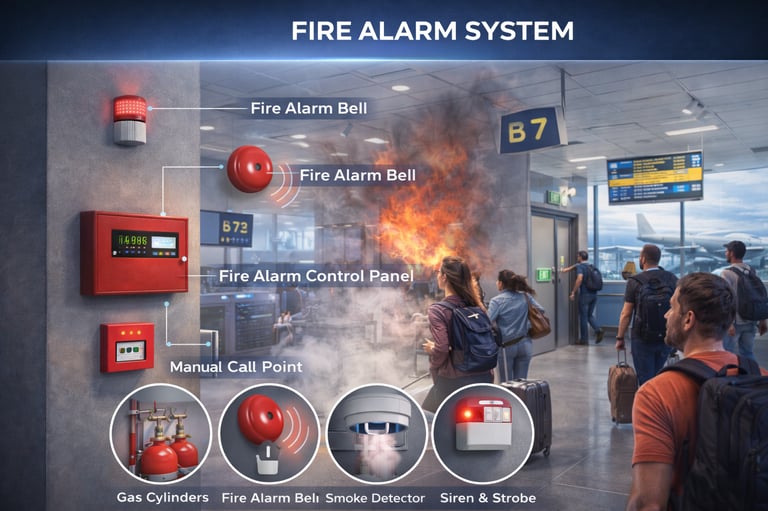
Fire alarm systems are the first line of defense against fire, designed to detect smoke, heat, and flames and alert occupants and emergency responders through audible and visual alarms. They consist of detectors, manual call points, control panels, and notification devices, operating through conventional or addressable systems with centralized monitoring.
By providing early detection and immediate alerts, fire alarm systems enable safe evacuation, faster emergency response, and effective protection of life and assets.
These systems are implemented in compliance with NBC, NFPA, IS, and FM standards, ensuring regulatory acceptance and operational reliability.
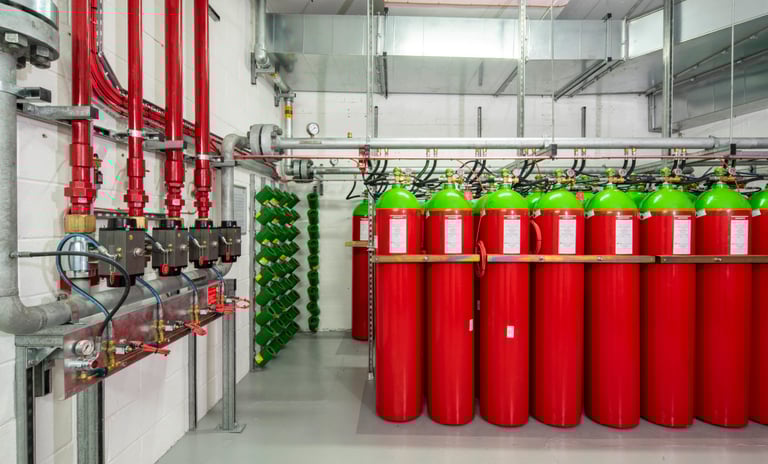
Fire suppression systems (FSS) are engineered safety solutions designed to detect, control and extinguish fires automatically without human intervention. FSS uses water, gas, foam or dry chemicals as suppression agents to rapidly contain fires, minimize damage and protect life, assets, and critical infrastructure. FSS provides fast and reliable fire control, especially in high-risk and mission-critical environments.
Immediate fire containment, reducing spread and escalation
Enhanced life safety for occupants and first responders
Asset and equipment protection, especially for sensitive electronics
Business continuity, minimizing downtime and losses
Reduced dependency on manual fire fighting, enabling safer evacuation
Fire Suppression Systems
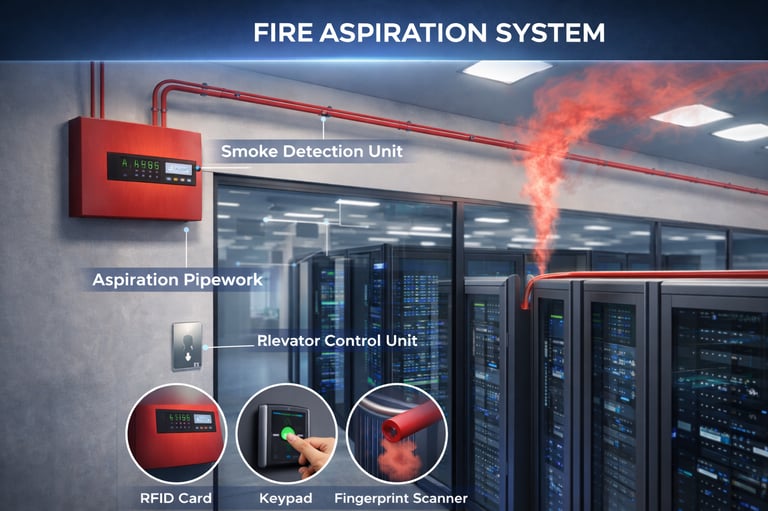
Fire Aspiration Systems, also known as Aspirating Smoke Detection (ASD) systems, are high-sensitivity fire detection solutions that continuously sample air through a network of pipes to detect incipient-stage smoke long before visible fire or conventional detectors activate. ASD’s provide very early warning, enabling proactive fire prevention and rapid response.
Ultra-early smoke detection, even at the invisible combustion stage
Reduced false alarms through intelligent filtering and analysis
Ideal protection for critical and high-value assets
Improved life safety by enabling early intervention
Continuous monitoring in challenging environments
Contact Us
Reach us anytime for support / Queries / Clarifications
Protexa support
info@protexa.in
+91 9743 913 433
© 2026. PROTEXA, all rights reserved.
Have a question
+91 7411 265 539
support@protexa.in
No 99/2, Sudersan Layout, Garvepalya, Bangalore South, Bangalore, Karnataka, 560068
www.protexa.in